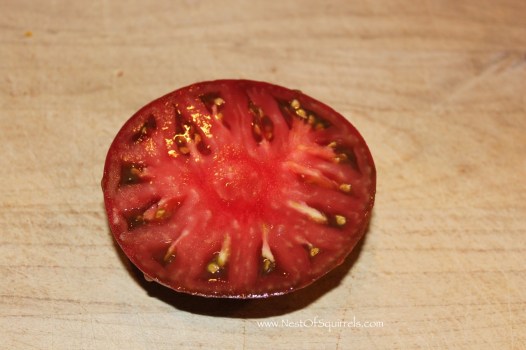
We have limited space in the suburban garden that is the Squirrels’ Nest so tomatoes are awarded prime real estate. Most every other plant is incidental, and subservient to the placement of the tomato plants.
“Watermelon this year?” Ms. Professor may ask. “Sorry, Sweetie, we need the space for the Old German variety I want to try this year.”
“Corn?”
“I’m sorry, my Darling, that takes up way too much space. My Granny told me you must plant at least four rows to get good pollination (Corn is a wind-pollianted plant) and we’re going to want that space for the Brandywines.”
So, in reality, our “garden” is really, more or less, (okay, more) a tomato patch.
And we are okay with that. Because we love tomatoes. And I mean LOVE! There’s a reason the French refer to a tomato as the Pomme D’amour, or “Love Apple.”
And so, here’s our humble offering of tips for growing tomatoes.
1-Find a good spot. We’re lucky. We have a geat spot: southern exposure, good drainage, and easily accessible from the kitchen. And at least 6 hours of sunlight is a good rule of thumb. Of course, the problem comes when we must rotate crop varieties, to cut down on the number of tomato-attacking pathogens in any given plot of soil. We do the best we can by alternating containers and shifting the beds a bit, but we have yet to fully overcome this particular hurdle.
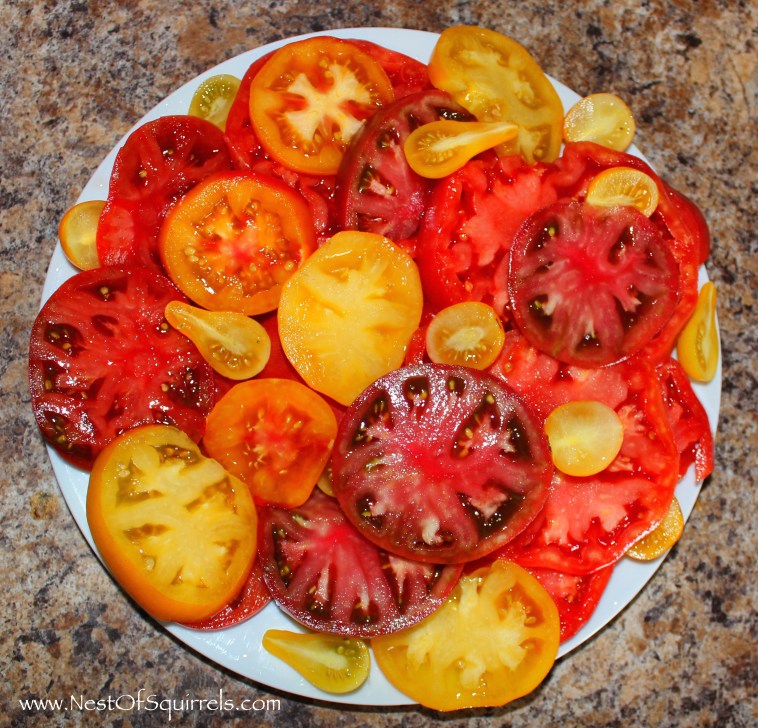
2-Grow your own seedlings. Although many good garden centers have interesting varieties thse days, the best bet is to get seeds and start your own plants. (If your family can grant you the forbearance to occupy most of the sunny windowsills and horizonatal surfaces in your home for a few weeks in the spring.) Cherokee Purple was a big hit this year as was the delicious Mr. Stripey and Black Krim. Brandywine is always a classic and you can’t beat that flavor!
3-Don’t be afraid to bury the plant as deep as you can when transplanting. Any buried stem will form roots. Some like to bury the stem in a “trench” running horizontal under the ground to take advantage of the warmth of the spring sun to stimulate growth. We usually just dig a deep hole and plop ’em in. Oh, and get lots of good compost in there while digging that hole. And if your transplants have any blossoms, pinch them off in order to concentrate the plants energy on building a big, sturdy root system. As hard as it is to pinch away those future tomatoes, this will pay dividends when you have a big healthy plant covered in blossoms..and then tomatoes!
4-Make sure your soil is well-drained (and, again, augmented with plenty of compost.) We use several large containers and a raised bed for some of our plants, as well.
5-Mulching your tomatoes can help keep any soil-born disease or fungus from getting on the lower leaves of your plants. Plus it helps keep the soil from drying out too quickly.
6-If you see diseased leaves, remove them immediately (and don’t add to the compost pile). Be prepared to rip the poor little plant from the garden if it doesn’t show signs of recovering, Ruthless, I know, but better to remove one sick plant than infect the entire plot.
7-A temptation I struggle with every year is planting the tomatoes too close to each other. After a few months of tomato-less winter, I want as many tomato plants in our garden plot as possible. But be warned: Don’t crowd your plants. Good air circulation goes a long way to keeping disease down. Plus properly spaced plants are much easier to harvest.
Oh, and bonus tip: Fish fertilizer. Smells like the morning breath of the unholy undead, but the ‘mater’s love it! But use with caution. If you get it on you, you won’t be welcomed back into the house for many hours. Many, many hours.
Do you have any great tips for tomato growing? I’d love to hear ’em!

 By all these lovely tokens
 But what a wonderful time to take a moment and breathe in the sweet September air. The tomatoes still taste of summer sun. And the cucumbers, still plentiful on the vines, smell green, green, green.














 NestOfSquirrels